
How it works
Home Air Conditioning
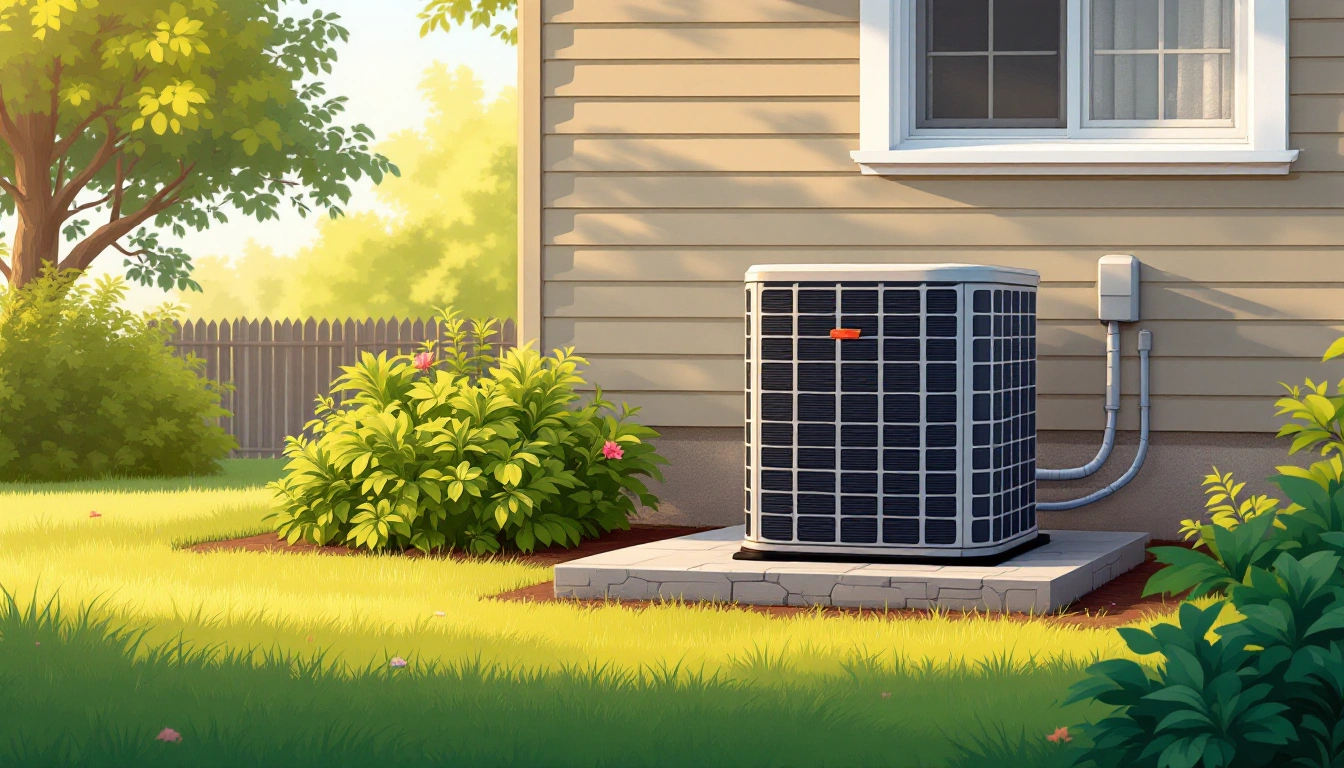
Home air conditioning cools and dehumidifies a home. Choose room units for one or two rooms, ducted central air when supply ducts exist, and ductless splits for zoned rooms.
Sections7
Home air conditioning lowers indoor temperature and humidity. Pick room units, ducted central cooling, or ductless splits based on how many rooms need cooling, whether ducts already exist, and whether winter heat belongs in the same system.
Home air conditioning: match equipment to rooms
Start with a room list and the normal door position for each space. A window or portable room unit suits one or two small areas with little installation work. Ducted central air suits a home that already has supply and return paths sized for the load. Ductless mini splits deliver air through wall or ceiling heads linked to outdoor equipment, which fits many retrofits where new ducts would be costly.
Compare the ductless and central-air delivery guide on the same floor plan before assuming one format wins. The mini split guide explains how split equipment links indoor and outdoor sections.
| Layout | Air path | Scope |
|---|---|---|
| Room air conditioner | Cooled air from a window, wall sleeve, or portable hose | One to a few adjoining rooms |
| Central air conditioner | Cooled air through supply and return ducts | Whole-home plan with existing or new ducts |
| Ductless mini split | Indoor head or short duct run per zone | Selected rooms; outdoor unit may serve several heads |
Scroll for more →
How cooling equipment moves heat
An air conditioner does not create cold air. It transfers heat from indoors to outdoors using a refrigerant circuit. Indoor air passes across a coil where heat is absorbed. Outdoor equipment releases that heat. When indoor air cools, moisture can condense and needs a drain path during cooling.
A heat pump uses the same heat-transfer cycle and can reverse it for winter heat. A cooling-only unit cannot. Check the exact equipment modes in the manufacturer data rather than assuming both seasons from the product shape alone. The heat pump systems guide separates air-source, ground-source, and delivery choices.
Moisture control is part of comfort. When indoor air cools below its dew point at the coil, water collects and should leave through the condensate path. A system that short-cycles because of oversizing may cool quickly without removing enough moisture. Capacity and runtime both belong in the comfort discussion.
Size and load before you compare prices
Capacity labels describe output under test conditions. They do not replace a load estimate for your rooms. Heat enters through walls, windows, roof, people, lights, and appliances. A larger number on the box does not cancel those gains.
- List each room to be cooled and its usual door position.
- Note sunny windows, ceiling height, and insulation level in plain terms.
- Compare quotes only when they name the same rooms and door assumptions.
- Use the BTU sizing calculator for area-based screening, then confirm with a room-by-room load where the job scope requires it.
Room units suit a defined opening or wall sleeve. Central and ductless designs need outdoor space, power supply, drains, and service access named in writing. The install price guide shows how to keep kit and site work separate in a quote.
Efficiency labels and ratings
Shopping labels compare equipment under standard test conditions. They do not record your home’s hours of use or local electricity rate. Keep the label with the number; an older SEER figure is not the same field as SEER2. The SEER rating guide explains how to keep comparisons on one metric.
Room air conditioners carry their own efficiency labels on the unit. Compare models within the same capacity class rather than across unlike sizes.
Reduce cooling load before upsizing equipment
Lower heat gain first so the installed capacity matches real need. EPA’s heating and cooling maintenance page states that nearly half of the energy used in your home goes to heating and cooling, so delivery habits and equipment condition affect bills.
- During summer, keep window coverings closed during the day to block the sun’s heat, per the DOE Energy Saver guide (2022).
- Turn the fan off when you leave the room, per the DOE Energy Saver guide (2022).
- Check the filter every month, especially during heavy cooling months; replace it when dirty or at least every three months, per EPA guidance on the same page.
- Turn kitchen, bathroom, and other exhaust fans off within 20 minutes after cooking or bathing, per the DOE Energy Saver guide (2022).
The air-conditioning energy checklist turns several of these items into a printable plan.
Operating costs stay in kilowatt-hours
Electricity bills track energy over time in kWh, not Btu/h of cooling output. A higher efficiency ratio can lower energy use for the same delivered cooling under test conditions. Actual cost still needs measured kWh or a stated scenario with your tariff.
The mini split power consumption guide separates watts, kWh and seasonal efficiency labels. The state electricity cost table gives average USD per kWh for comparison scenarios only.
No single formula here predicts a monthly bill. Weather, setpoint, house tightness, and runtime dominate.
Peak demand tariffs, if your utility uses them, can add charges beyond the kWh rate. Keep the tariff name and meter dates with any comparison you make. A lower SEER2 on paper does not prove a lower bill until runtime and rate are stated.
Upkeep, repair and replacement timing
Routine care keeps airflow and drainage working. Follow the exact owner manual for filter access, cabinet cleaning limits, and condensate checks. The ductless maintenance guide lists owner tasks separate from refrigerant and electrical service work.
EPA’s replacement guidance suggests considering a change when:
- A heat pump or central air conditioner is more than 10 years old.
- Repairs are frequent and energy bills rise.
- Some rooms stay too hot or too cold while equipment runs.
- Humidity or dust problems persist after basic airflow checks.
Installed correctly, ENERGY STAR qualified high-efficiency units can save up to 20 percent on heating and cooling costs when they replace older equipment, per that EPA page.
When a technician recommends a major repair on aging equipment, compare the repair scope with a replacement quote on the same rooms. Ask what efficiency rating the new unit would carry and who performs start-up checks. Keep refrigerant work, electrical connections, and duct repairs as separate line items so the choice is visible.
For setpoints that reduce runtime without sacrificing safety, see the thermostat settings guide. A DOE guide published in 2010 lists 78°F as a summer away starting point when the home is unoccupied (DOE home heating and cooling guide, 2010).
Return to the how mini splits work guide for the system map. Use the maintenance and power guides when you name exact equipment.
Quick answers
What is the difference between room air conditioning and central air?
Room units cool one space from a window or wall opening. Central air moves cooled air through ducts to serve a planned set of rooms. Both need a size matched to heat gain in the served space.
Can a ductless mini split cool a whole home?
It can serve multiple rooms when the design lists each zone and indoor unit. Closed doors still matter. A head in one room does not automatically cool another with the door shut.
Do new air conditioners always use less electricity?
Not always. Compare measured kWh on similar weather weeks, the efficiency label on the quote, and whether the replacement scope matches the rooms you actually cool.
Should I close blinds while the AC runs?
When direct sun heats the glass, yes. Keep sunny windows covered during the day in summer.
When is repair no longer enough?
See the numbered EPA replacement signals in the upkeep section. Use that list before you treat a single repair quote as the full decision.